Why the Automotive Industry Needs a Better Way to Capture Vehicle Evidence
Why vehicle capture is becoming one of the most important operational infrastructure layers in automotive retail.
Most dealers don’t think they have a vehicle imaging problem.
Until they try to scale operations around it.
At first glance, vehicle photography feels simple. Walk the car. Take enough photos. Upload them to your merchandising platform. Move on to the next unit.
But behind the scenes, dealerships are spending millions of dollars every year operating around inconsistent vehicle capture.
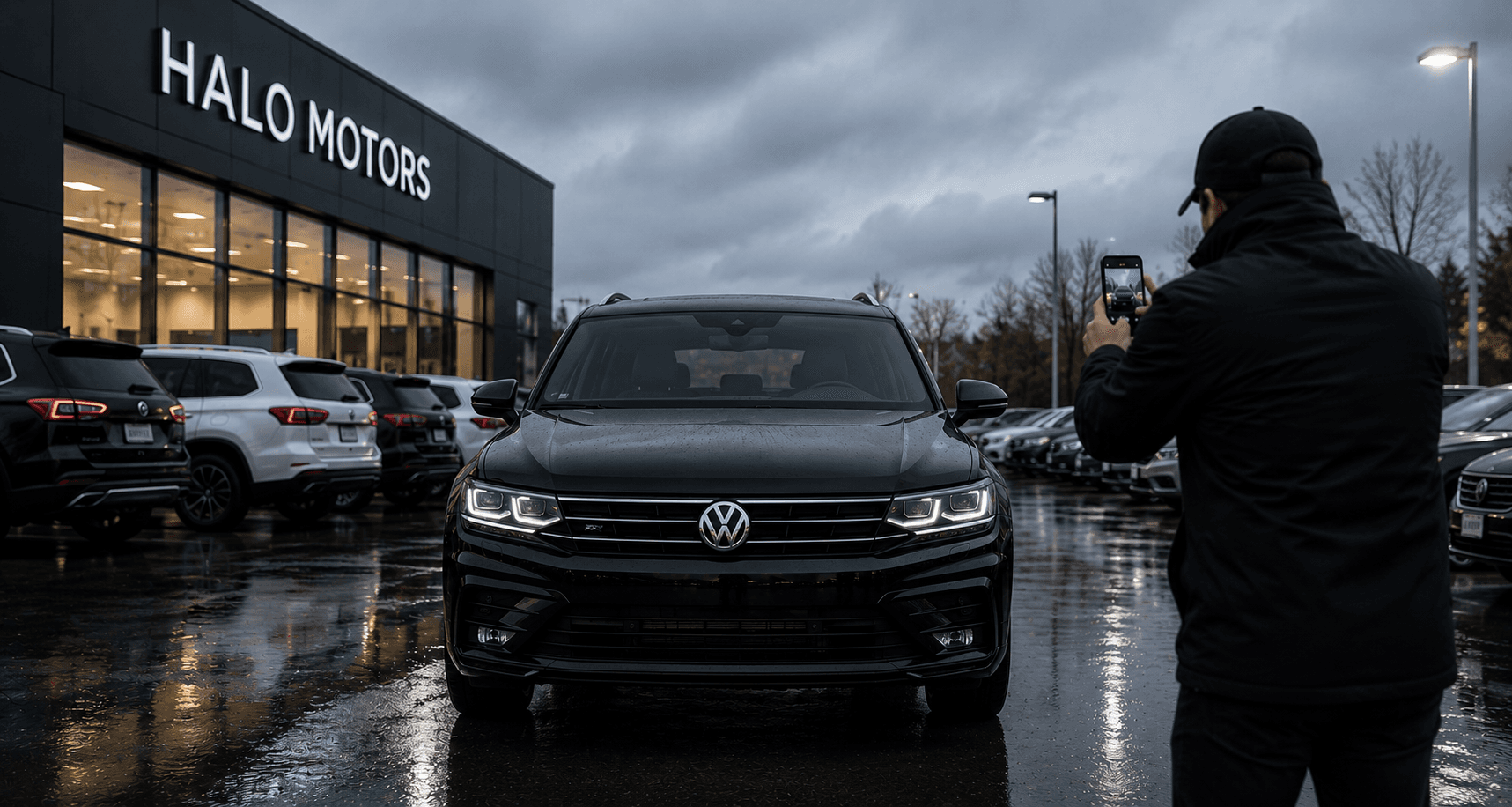
Different staff members photograph vehicles differently. Angles change. Framing changes. Distance changes. Some cars are wet. Some are dirty. Some are parked too close together. Some captures miss key details entirely.
And while the process may look manageable on the surface, the operational impact compounds quickly.
A vehicle delayed getting online by even a single day affects merchandising speed, inventory turn, carrying costs, and sales velocity. Inconsistent photos reduce trust in listings. Missing evidence creates friction between departments. Reconditioning teams, appraisers, transport teams, and merchandising teams often end up working from entirely different visual records of the same vehicle.
For years, the industry accepted this because humans could adapt around the inconsistency.
AI systems cannot.
That’s becoming one of the biggest operational shifts happening inside automotive retail right now.
The Industry Isn’t Lacking Images — It’s Lacking Operationally Trusted Evidence
Automotive retail already produces an enormous amount of vehicle imagery.
The problem is that most of it was never designed to function as structured operational evidence.
That distinction matters.
A salesperson may look at a vehicle photo and think it’s “good enough.” But downstream systems increasingly rely on those images for operational decisions:
- merchandising
- appraisal
- reconditioning
- transport verification
- inspections
- claims
- AI-driven workflows
If the capture itself is inconsistent, every downstream process inherits that inconsistency.
This is why many automotive AI initiatives quietly struggle.
The limitation is often not the AI model. It’s the input.
The Same Vehicle Gets Captured Over and Over Again
One of the least discussed inefficiencies in automotive operations is how many times the same vehicle gets re-photographed throughout its lifecycle.
A vehicle may be:
- photographed at acquisition
- photographed again for merchandising
- documented during reconditioning
- captured for transport verification
- reviewed for appraisal
- inspected again at sale or auction
Often by different people. Using different standards. For different systems. With no shared operational structure tying the evidence together.
The industry has unintentionally built disconnected imaging workflows instead of shared visual infrastructure.
That creates operational drag everywhere.
Why This Matters More Than Ever
The rise of AI is forcing dealerships to rethink workflows that were previously tolerated simply because “that’s how it’s always been done.”
Dealer groups today are not just looking for more software.
They are looking for operational compression:
- faster time-to-line
- reduced manual oversight
- more consistent merchandising
- improved accountability
- systems that can scale across rooftops without depending entirely on individual employee behavior
But none of that works reliably if the underlying visual evidence is inconsistent.
This is where the market is beginning to shift.
Forward-looking dealer groups are starting to realize that vehicle capture itself is becoming infrastructure.
Not a photography task. Not a marketing task.
Operational infrastructure.
The Future Vehicle Record Will Be Visual
Over time, every vehicle will likely develop a continuously evolving visual history tied to operational workflows.
Not just photos sitting in disconnected folders.
But structured visual evidence connected to:
- condition
- damage
- repairs
- transport events
- merchandising states
- inspections
- AI-driven decision systems
The vehicle record itself is becoming visual-first.
And the companies that standardize how that evidence is created will help shape the next generation of automotive operations.
The Opportunity Ahead
The automotive industry spent decades investing in systems of record:
- DMS platforms
- CRMs
- inventory systems
- logistics systems
The next infrastructure layer may become systems of operational visual truth.
Platforms that make vehicle evidence:
- repeatable
- trustworthy
- machine-readable
- operationally useful across multiple workflows simultaneously
Because in an AI-driven environment, the way evidence is created matters just as much as the systems analyzing it.
And the dealers who solve that first will move faster than everyone else.